
Introduction
If you’ve spent any time researching how to start a dropshipping business, you’ve almost certainly come across the name Doba. As one of the oldest and most well-known players in the dropshipping automation space, Doba Dropshipping promises to simplify the entire process for entrepreneurs.
But what exactly is Doba? And more importantly, is it the right platform for your online store in 2024?
In this comprehensive guide, we’ll dive deep into the world of Doba Dropshipping. We’ll break down how it works, its pricing, its key features, and the undeniable pros and cons. By the end of this article, you’ll have all the information you need to decide if a Doba Dropshipping membership is a smart investment for your e-commerce business.
What is Doba?
Founded in 2002, Doba is a dropshipping wholesale marketplace. It’s not a supplier itself but rather a massive aggregator. Think of it as a “middleman” that connects online retailers (you) with thousands of vetted wholesalers and suppliers.
The core value proposition of Doba Dropshipping is centralization. Instead of creating accounts with dozens of individual suppliers, you get one single dashboard where you can:
- Search a massive product catalog.
- Compare prices from different suppliers.
- Place orders for products.
- Manage your inventory levels.
This model is designed to save you time and streamline your operations, which is a huge draw for new store owners.
1.Key Features of the Doba Dropshipping Platform
Why do people choose Doba Dropshipping? Here are its standout features:
E-commerce Integrations: One-click integration with the biggest e-commerce platforms makes store setup faster.
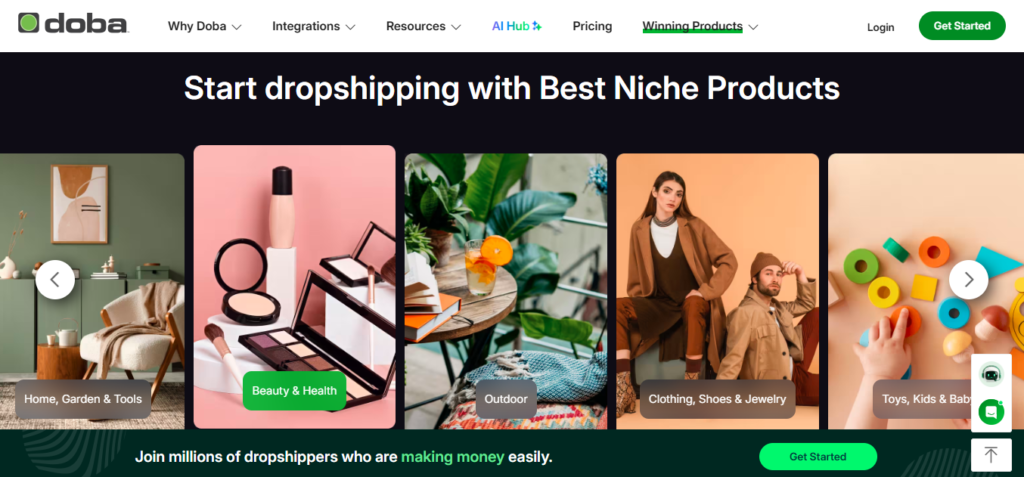
Massive Product Selection: With over 2 million products, the choices are vast.
Supplier Vetting: Doba claims to work with pre-vetted suppliers, which can reduce the risk of working with unreliable partners.
Centralized Order Management: Manage all your orders from different suppliers in one place.
Inventory & Price Sync: Doba can (in theory) help sync stock levels and price changes to prevent selling out-of-stock items.
2.Doba Pricing
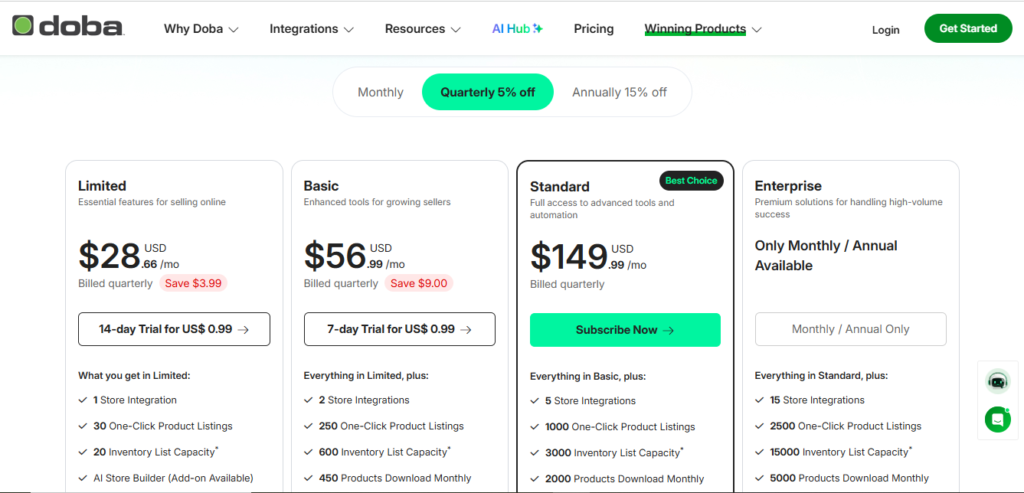
This is a crucial factor. Doba typically offers tiered plans:
- Starter Plan (~$25/month): Basic access, suitable for very new stores.
- Business Plan (~$50/month): More product exports, better analytics, and more order imports.
- Enterprise Plan (Custom Pricing): For high-volume sellers, with dedicated support.
Always check their official website for the most current pricing, as it often changes.
The bottom line: You need to make enough profit to not only cover the product cost but also this monthly fee. For a new store with low sales volume, this can be a significant hurdle
3.The Pros and Cons of Using Doba for Dropshipping
No platform is perfect. Let’s weigh the advantages and disadvantages honestly.
The Pros
- Saves Time: The biggest benefit. No need to build relationships with hundreds of individual suppliers.
- Easy to Start: The platform is designed for beginners with little to no experience in sourcing products.
- Reduced Complexity: Managing one account is infinitely easier than managing 50.
- Product Research Tools: Built-in tools can help you analyze product popularity and potential profit margins.
The Cons
Supplier Reliability Isn’t Guaranteed: Even “vetted” suppliers can have issues with stock or shipping times, which reflects poorly on your store
Monthly Subscription Cost: This is a recurring overhead that cuts into your profits. Other methods (like contacting suppliers directly) have no monthly fee.
Higher Product Costs: Because Doba is a middleman, the wholesale prices can sometimes be higher than if you sourced the product directly from the manufacturer. This hurts your profit margin.
Potential for Competition: Since many other Doba members are selling the same products, you can end up in a “race to the bottom” on price.
…
Conclusion/Summary (H2)
So, should you use Doba Dropshipping for your business?
Doba is best for:
- Absolute beginners who value simplicity and a quick start over maximizing profits.
- Sellers who want a centralized system and are willing to pay a premium for the convenience.
- Stores that need access to a wide variety of products without the hassle of multiple supplier accounts.
You might want to look at alternatives if:
- Profit margin is your top priority. You can’t afford to have a middleman markup and a monthly fee.
- You are willing to do the extra work of sourcing suppliers directly to get better prices.
- You are focusing on a specific niche where more specialized suppliers (like Spocket) exist.
Ultimately, a successful Doba Dropshipping store is possible, but you must factor in the costs and competition. For many, starting with Doba and then moving to direct supplier relationships as sales grow is a viable strategy.