Introduction
You’ve typed “Udemy” into Google. Maybe you’re looking to learn Python, improve your public speaking, or finally master Photoshop. With over 210,000 courses and 60 million students, Udemy is a giant in the online learning world. But is it the right platform for you? Is a Udemy certificate valuable? And with constant sales, what’s the real price you should pay?
This isn’t a superficial glance. This is the most comprehensive Udemy review you’ll find, breaking down everything from course quality and instructors to the true value of a completion certificate. Let’s dive in
What is Udemy? A Quick Overview
At its core, Udemy is a global marketplace for learning and teaching online. Unlike subscription models like Skillshare or Coursera, Udemy operates on a per-course purchase system. This means you buy a specific course and own it for life.
For Instructors: A platform to create, host, and sell their knowledge.
For Students: Access to a vast library of courses on virtually any topic.
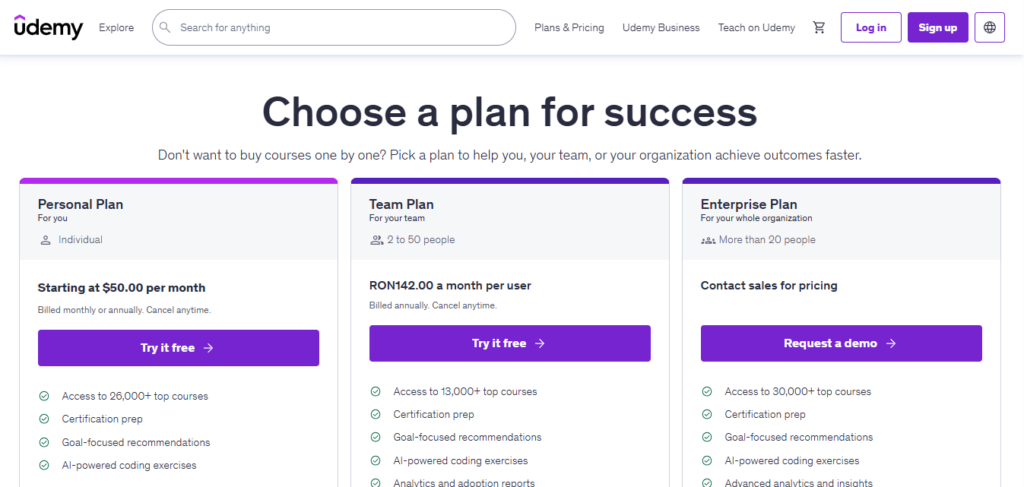
Udemy Pricing & Plans: Personal Plan vs. Buying Courses Individually
Many people are confused by Udemy’s pricing. It’s not a one-size-fits-all model. Essentially, you have two main ways to pay, and choosing the right one depends entirely on your learning goals.
Option 1: Buying Courses Individually (The Most Common Method)
This is the classic Udemy model. You purchase a single course and own it for life.
- List Price: $99.99 – $199.99 (But Ignore This!)
- Actual Sale Price: $12.99 – $24.99
How it works: Udemy runs massive site-wide sales almost constantly (especially around holidays like New Year’s, Black Friday, etc.). The true market value of most individual courses falls squarely in the $15-$30 range.
- Who is this for? The casual learner who wants one or two specific courses. This offers the best value if you don’t plan to take multiple courses per month.
Option 2: Udemy Personal Plan (The Subscription Model)
For power users, Udemy offers Udemy Personal Plan, a monthly or annual subscription that gives you access to a curated collection of thousands of top-rated courses.
- Cost: Approximately $20 – $30 per month (billed monthly) or $100 – $200 per year (billed annually, which offers significant savings).
What’s Included:
- Unlimited access to 11,000+ top courses in the Personal Plan collection.
- A “Qwiklabs” integration for hands-on practice in tech courses.
- Learning paths and curated collections.
The Catch: You only retain access to the courses for as long as your subscription is active. If you cancel, you lose access.
Who is this for? The avid learner who consumes multiple courses per year, someone exploring a new field, or professionals who need continuous, on-demand training.
The Pros: Why Udemy is So Popular
1. An Unbeatable Variety of Courses
From “Data Science A-Z” to “Sourdough Bread Baking for Beginners,” if a skill exists, there’s likely a Udemy course for it. This sheer variety is its biggest strength.
2. Affordable & Constant Sales
While listed prices can be high ($100+), Udemy has sales almost perpetually. Pro Tip: Never pay full price. Courses regularly drop to $12.99 – $24.99.
3. Lifetime Access
Once you purchase a course, it’s yours forever. You can revisit the material anytime, which is perfect for refreshers.
4. Learn at Your Own Pace
There are no deadlines. You can binge a course in a weekend or take two years to finish it.
5. Practical, Project-Based Learning
The best Udemy courses focus on “doing.” You don’t just learn theory; you build a website, create a digital marketing plan, or compose a song
The Cons: The Honest Truth About Udemy’s Downsides
The Cons: The Honest Truth About Udemy’s Downsides
1. Inconsistent Course Quality
This is the biggest caveat. Since anyone can become an instructor, quality varies dramatically. A 5-star course on one topic might be next to a terrible one on another.
2. The “Sale” Mind Game
The constant fluctuation between “original price” and “sale price” can feel manipulative. Remember, the true value of a course is around $20.
3. The Value of a Udemy Certificate
Let’s be blunt: A Udemy certificate of completion is not an accredited credential. It will not count for college credit. Its value is in proving you’ve completed the training to a potential employer, not as a formal qualification.
4. No Standardized Curriculum
Unlike platforms like Coursera that partner with universities, there’s no standardized curriculum. Each course is its own island.
…
Conclusion
Udemy is an incredible resource if you are a discerning buyer. It is not a platform where you can blindly trust every purchase. When you use the checklist above to find a highly-rated, well-produced course from a passionate instructor, the value for money is arguably the best in online education.
It’s the perfect tool for acquiring specific, practical skills without a long-term financial commitment. Just remember: you are not buying a degree; you are buying access to an expert’s knowledge. Choose that expert wisely.